Between Baku’s Energy and Ganja’s Creative Spirit
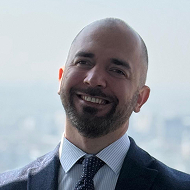
An educational assessment expert and quality auditor, Vali Huseyn works as a digital nomad based between Azerbaijan’s capital, Baku, with its charm, dynamism, and chaotic energy that draws people in, and his hometown of Ganja, known for its creative spirit and calm charisma, as if made for those who prefer a more reflective and balanced pace of life.
A Mission Embedded in Identity
With an agile and adaptive approach to navigating different spaces and cultures, he carries a mission deeply embedded in his identity. His name, Vali, literally translates from Turkish as “a leader” or “someone who guides a community.” In many ways, this reflects the work he pursues today. He regularly leads writing and video production initiatives, dedicating time to researching, creating, and collaborating on blogs and informative reels connected to his expertise and culture. Through this work, he aims to raise awareness, promote culture, and contribute meaningfully to conversations in the educational assessment and edtech space, almost as a “missionary” for the field. A video taken 15 years ago of a speech he gave at a family gathering in the USA captures this spirit perfectly.
From Failure to Self-Discovery
Our featured guest today began his educational journey in Ganja in the early 2000s, a period marked by uncertainty and limited economic and social opportunities. In search of self-discovery and personal growth, his first attempt to study abroad and push beyond existing limits came during his bachelor’s degree. Like many young people driven by excitement and ambition, he quickly encountered failure during an interview for an American exchange program due to limited English proficiency. The gap between his perceived and actual English skills came as a shocking realization at that age.
This moment of self-assessment became a powerful source of motivation and perhaps one of the reasons why assessment later became so deeply connected to his understanding of identity, growth, and self-development. Within just one or two years, he improved his English skills significantly and eventually began helping others practice English and build confidence by leading free English conversation clubs.
Waiting for the Right Opportunity
The story became even more interesting from there. Later, although he received a scholarship opportunity with a non-degree offer to study in the US, he chose to decline it with confidence, knowing from earlier experience the value of waiting for the right moment. A year later, he pursued the Fulbright Scholarship/Azerbaijani State Program and went on to study a Master of Education in Education Policy Planning and Administration at Boston University.
It was the same program through which both Mr. Emin Amrullayev, the current Minister of Education and Mr. Vusal Huseynov, the Head of the State Migration Service of Azerbaijan, studied as part of the same cohort.
Building Expertise in Educational Assessment
He later joined a large-scale assessment organization, now known as the State Examination Center. To strengthen his expertise in educational assessment, he pursued a Diploma in Educational Assessment from Durham University, through the Chevening Scholarship. During this period, he also had the opportunity to meet Queen Elizabeth II at one of the events he attended, an occasion he remembers as a gentle reminder of how timing and opportunity can shape one’s journey.
His experience in the assessment industry became increasingly international after he began working independently as a consultant in the field. He now collaborates with companies in the United Kingdom, Canada, and the Netherlands operating in educational assessment and edtech.
Academic Achievement as Identity
Our readers may wonder: why study so much? His strong passion for learning emerged from the struggle to fit in during his school years. At that age, many students define themselves through popularity, clothes, sports, appearance, or social status. For him, academic achievement became the strongest card to play, studying hard and outperforming his peers.
Through constantly questioning himself and trying to transform weakness into personal strengths, he became increasingly self-reflective and inclusive toward others. This perspective deepened even further as he learned about different cultures and languages. Perhaps that is also why he enjoys exploring diverse cultures and building connections within his areas of expertise.
A Cultural Bridge Across the Region
Vali’s Azerbaijani background reflects a blend of Turkic ethnic roots and Russian influence, which contributed to his familiarity with both Turkish and Russian languages from an early age. In many ways, being born in Azerbaijan gave him the advantage of growing up with exposure to multiple languages and cultural perspectives.
He is now proficient in four languages: Azerbaijani, English, Turkish, and Russian, and works across the Caucasus and Central Asia promoting the region’s assessment systems and unique approaches to testing and admissions. He supports large-scale educational assessment organizations in modernising the design, development, and implementation of innovative, fair, valid, and reliable assessments, both within the region and internationally.
Speaking the Institutional Language of Reform
Many government organizations, while navigating complex local priorities, may at times feel uncertain when introduced to international practices and reform models. Vali describes himself as an assessment “missionary”, working with organizations across the world to promote excellence in assessment practices. By speaking both their linguistic and institutional language, he helps make these conversations more approachable and relevant.
He describes his mission as raising awareness of effective assessment practices, supporting the region in embracing technological development while preserving cultural heritage, and serving as a cultural bridge between countries across the region. While travelling extensively throughout the region, he also enjoys creating explanatory videos that use familiar concepts from culture, sports, and nature to explain technical assessment practices in accessible, everyday language.
Connecting the Region to Global Assessment Networks
Our panelist has also been actively involved with international associations in educational assessment for many years. He first supported the International Association for Educational Assessment (IAEA) as a conference manager and a board member, and later, after joining Vretta, advocated for bringing the conference to Toronto.
Now, seven years later, he collaborates with the host organization, the Education Quality and Accountability Office (EQAO) of Ontario, Canada, and the Supporting Partner organization, Vretta, as a strategic advisor supporting the IAEA 2026 Conference in Toronto, while also serving as the IAEA Conference Ambassador for the Caucasus and Central Asia region.
He has also joined the e-Assessment Association team as the regional representative for Central Asia and Caucasus, promoting both the region and its assessment practices.
Aligning National Assessments with Global Standards
Vali also shares insights into a key project in Central Asia. He serves as the lead regional assessment expert from AQA Global Assessment Services on a World Bank-funded initiative in the Kyrgyz Republic. The project focuses on reviewing national assessment systems and aligning them with the UNESCO Institute of Statistics (UIS) technical criteria for SDG reporting, with particular attention to assessment quality, comparability, and international benchmarking practices.
The Audit Experience That Unified Expertise
One of the most rewarding professional experiences for him so far was an auditing engagement in Mexico. He was assigned as a quality auditor by the Dutch company – RCEC for its client – CENEVAL, in Mexico.
What made the experience especially fulfilling was the opportunity to bring together all of his strengths at once: expertise in educational assessment, an understanding of institutional assessment practices, auditing perspectives, and strong communication skills. The experience also revealed his potential to support the development of quality assurance systems within assessment organisations through whiteboard-driven workshops focused on institutional mapping, process transparency, and capacity building.
AI, Adaptive Testing, and the Future of Measurement
Our guest also shared the challenges and considerations involved in implementing large-scale digital assessments, particularly concerns related to infrastructure readiness and the level of exposure students and teachers have to digital tools. He highlights Kazakhstan as an example of a successful transition to digital university admission examinations, while noting that countries such as the United Kingdom are taking a more gradual approach to transformation.
He also points to the growing risk of construct underrepresentation in the age of AI and digital learning environments, arguing that the roles of various agents involved in learning and assessment processes will need to be considered more carefully in both construct definition and measurement design. Vali concludes by discussing the potential roles of AI in large-scale assessment, particularly in scoring and item generation for constructed responses. He emphasizes the importance of public perception when implementing AI technologies in order to support fairness and avoid unintended consequences.
A Vision for Fully Integrated Digital Assessment
Our respondent shares the story of how he connected with the Vretta team through international conferences, particularly during professional engagements in Mexico. He views Vretta’s success as being closely tied to its innovative end-to-end solutions approach, which he considers a key advantage over many other service providers. According to him, this fully digital and integrated model offers strong potential for countries and organizations seeking to transition to comprehensive digital assessment systems, rather than relying on multiple disconnected providers.
He also explains that Vretta’s ambition and vision strongly influence his own perspective on the future of assessment and educational technology. Currently, Vali contributes to research and publications focused on best practices and innovations in the e-assessment and learning space, which are shared with the global assessment community through Vretta’s monthly newsletter, Vretta Buzz.
Work, Travel, Culture, and Reflection
The conversation concludes with our contributor explaining that his work-life balance is closely intertwined with his professional journey. Outside of work, he exercises regularly, enjoys spending time outdoors, and appreciates the natural environment. He also enjoys cooking, particularly experimenting with meat-based dishes, and lately has developed an interest in preparing steak.
As an example, he shared that when travelling to new destinations for work, he often combines professional engagements with cultural observation and what he describes as “social tourism” to better understand local contexts and inform his practice. He values taking time to observe, experience, and learn from different cultures.
Please feel free to reach out to Vali at: vali@bu.edu.

