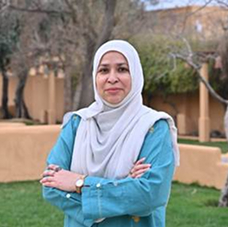
An educator and assessment professional from Karachi, Pakistan, Munira Mohammad Rangwala is the Manager of Assessment at the Aga Khan University Examination Board (AKU-EB). She holds a Master of Business Administration in Human Resource Management from Pakistan Air Force – Karachi Institute of Economics and Technology (PAF-KIET), a Master of Philosophy in Education from Aga Khan University, and is currently pursuing a Ph.D. in Education.
After graduating from university, Munira explains that she entered the teaching profession by accident as a substitute teacher and fell in love with it. She spent 11 years as a classroom teacher teaching at the secondary and upper secondary levels before transitioning to the AKU-EB as a subject-matter expert and item author. There, she became involved in curriculum development, assessment design, and the use of data to improve education systems. It was during this time that she realized she could make a broader impact on education through her work in assessment.
She explains that the University operates a private examination board that conducts assessments in two streams: project-based and large-scale, high-stakes assessments. The project-based program, designed for primary and middle school students (Grades 4-8), focuses on assessing transversal, 21st-century skills and competencies rather than subject content. It uses a school-based assessment model in which teachers evaluate students through guided inquiry projects, with scores reported relative to class norms.
The AKU-EB also designs, develops, and implements nationwide high-stakes examinations for affiliated schools at the secondary (Grades 9-10) and higher secondary (Grades 11-12) levels. These assessments help students obtain scholarships and gain admission to international universities. Following the high-stakes examinations, schools receive personalized performance reports that provide detailed question-level analysis, including comparisons between school and national averages. Schools also receive qualitative feedback through training webinars, along with descriptive insights into student misconceptions and strategies for improvement.
The AKU-EB assesses reading, writing, and listening skills. Assessments are offered in Urdu and English, with Sindhi available regionally. In the future, the AKU-EB is considering expanding its language offerings to include Persian, Mandarin, and French, subject to demand. Currently, all assessments are administered using a paper-and-pencil format.
Munira explains that Pakistan faces significant challenges in implementing online assessments due to unreliable electricity and Internet connectivity across regions, as well as limited access to technology in schools. She discusses the organization’s dilemma in transitioning to online assessment, balancing efficiency and transparency with fairness to students, who would receive the same credentials regardless of the assessment format.
Munira also highlights two major challenges facing assessment in Pakistan. The first is the quality of assessments, which focus on rote memorization and recall rather than higher-order thinking skills. The second is the administration of examinations, including issues such as exam paper leaks and cheating, that have undermined the credibility of public examination boards.
Munira discusses the security measures implemented by AKU-EB to ensure the integrity of assessments in Pakistan. Examination materials are printed in-house, secured in bank or community safe-deposit lockers that require multiple keys for access, and all processes are monitored through CCTV surveillance. She also describes the work of the Quality Assurance Department, whose staff conduct unannounced visits to 30% of examination centers daily to ensure compliance with best-practice standards.
Although its assessments are currently offered in paper format, AKU-EB recognizes the growing role of digital assessment. Munira notes that AKU-EB has held discussions with Vretta about implementing data pipelines; however, a transition to digital assessments remains under consideration for the future.
Munira’s research interests focus on using assessment to empower stakeholders and making high-stakes examinations more accessible to diverse learners without compromising academic standards. She takes pride in her role in transforming assessment practices in Pakistan over the past 14 years, contributing to greater credibility, fairness, and positive educational outcomes nationwide. While acknowledging the many challenges along the way, she says she takes great satisfaction in having “made the impossible possible.”
In recognition of her ongoing contributions to educational excellence and student-centred assessment practices, Munira received the Education Icon Award 2026 from the Federation of Private Schools Pakistan. This award recognizes and celebrates her commitment to:
- Fair and Data-Driven Assessment: Advancing national examinations beyond rote learning to emphasize critical thinking and creativity.
- Educational Leadership: Guiding assessment practices and quality assurance across Pakistan’s education sector.
Currently, Munira serves as the South Asia Conference Ambassador for Pakistan, India, Bangladesh, and Sri Lanka for the 51st Annual International Association for Educational Assessment (IAEA) 2026 Conference, which will be held in Toronto from September 27 to October 2. The conference is hosted by the Education Quality and Accountability Office (EQAO) in collaboration with its technology partner, Vretta. You can learn more about the conference by accessing the conference website here: https://www.eqao.com/iaea-annual-conference/.
Away from her professional responsibilities, Munira enjoys reading, spending time with her family, and travelling as much as she can, for, as she puts it, “Travelling is learning.” Feel free to reach out to Munira at munira.mohammad@aku.edu.
 RMJ ASSESSMENT