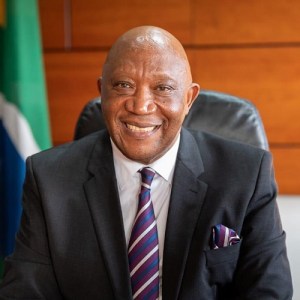
Dr. Mafu S. Rakometsi, Chief Executive Officer of the Council for Quality Assurance in General and Further Education and Training (Umalusi[1]), is an accomplished educator and administrator whose career spans 43 years of service in the South African public education sector. He holds a Bachelor of Arts (B.A), Bachelor of Arts Honours (B.A. Hons) in History from the University of the North; a Master of Arts (M.A.) in History from the University of KwaZulu-Natal; a Doctor of Philosophy (Ph.D.) in History and History of Education from the University of the Free State; and a Bachelor of Laws (LLB) from the University of South Africa.
After completing a teaching diploma, he taught for several years at various secondary schools in the Free State, where he was born and raised. Following his experience as a classroom teacher, he served as a senior lecturer and Head of Department of Professional Studies and Student Affairs at Tshiya College of Education, while concurrently lecturing in History at the QwaQwa Campus of the University of the North. Thereafter, he was appointed Head of Subject Advisory Services in the Welkom Education District in the Free State and subsequently rose through the ranks to become Head of Examinations at the North West Department of Education.
He later returned to the Free State, where he served as Director and then Chief Director for Educational Development and Professional Services at the Free State Department of Education. He was subsequently promoted to Superintendent-General (Head of Education). In 2009, Dr. Rakometsi was appointed Chief Executive Officer of Umalusi.
South Africa has four assessment bodies, two public and two private. The public assessment bodies are the Department of Basic Education (DBE) that sets and administers national public school examinations, including the National Senior Certificate (NSC) and the Department of Higher Education and Training (DHET) that is responsible for setting and administering the General Education and Training Certificate: Adult Basic Education and Training (GETC: ABET) examinations for public adult education and training centres, as well as vocational examinations associated with National Certificate (Vocational) offered by public and accredited private colleges.
The two private assessment bodies are: the Independent Examinations Board (IEB), which is accredited by Umalusi to conduct the NSC examinations for accredited independent and private schools and the GETC: ABET examinations for accredited private colleges and the South African Comprehensive Assessment Institute (SACAI), which is also accredited to conduct the NSC examinations for accredited independent and private schools and the GETC: ABET examinations for accredited private colleges.
Dr. Rakometsi explains that Umalusi carries out its assigned responsibilities through a standards-setting framework, which involves, amongst others, the evaluation and accreditation of private assessment bodies and private education providers to offer qualifications that are quality assured by Umalusi. The organisation externally moderates examination papers and institution-based assessments, conducts research, and maintains statistical data and information.
While digital assessments are under consideration for the future, the current examinations remain paper-and-pen-based. Dr. Rakometsi discusses the challenges associated with quality assurance in South African education. He explains that while public institutions are deemed accredited, this creates challenges because concerns are sometimes raised about differences in quality between public and independent schools. He notes that extending all quality assurance processes to all schools would require significant additional funding and infrastructure, and that political dynamics could further complicate the process.
He also discusses challenges such as the political dynamics around examination results as well as the publication of public league tables ranking schools and provinces. He emphasizes that Umalusi is an apolitical organization focused solely on maintaining quality, integrity, and fairness. He further identifies limitations in current assessment methods in the digital age and highlights the need for education systems to adapt to societal changes.
Dr. Rakometsi is passionate about education and is deeply committed to improving the standards of education. His many contributions to and impact on education in South Africa are reinforced by this statement published in connection with his appointment as the President of the International Association for Educational Assessment (IAEA) in 2025:
“…Rakometsi has been instrumental in strengthening education quality assurance mechanisms across the country. Under his leadership, Umalusi has developed a reputation for upholding rigorous and credible standards in the certification of school and college qualifications. He has championed various reforms that modernised assessment processes, improved public confidence in national examinations and promoted data-driven insights into learner performance. Rakometsi is widely recognised for his strategic thinking, administrative excellence and commitment to education transformation.”[2]
In addition to his role as President of IAEA, Dr. Rakometsi serves as a member of numerous boards and councils, including the South African Qualification Authority (SAQA), Council on Higher Education (CHE), Quality Council for Trades and Occupations (QCTO), Helderberg College of Higher Education, Maluti Adventist College, Southern Africa Association for Educational Assessment (SAAEA), and Association for Educational Assessment in Africa (AEAA).
Regarding his career achievements, Dr. Rakometsi indicates that he is most proud of stabilizing Umalusi and establishing it as a trusted authority in South Africa and neighbouring jurisdictions through consistent integrity and discipline. He also takes great satisfaction in having held leadership roles in regional, continental, and international assessment organizations. In his view, integrity, trust, and transparency are essential to protecting the credibility of qualifications.
He is looking forward to attending the 2026 IAEA Annual Conference in Toronto, hosted by the Education Quality and Accountability Office (EQAO) in collaboration with its technology partner, Vretta. He anticipates rigorous discussions on topics such as of the relevance of today’s education and assessment systems in the era of artificial intelligence, as well as how to ensure assessment integrity, trust, transparency, and innovation.
Education is his obvious passion, but outside of his professional responsibilities, Dr. Rakometsi’s personal interests include fitness activities such as walking, running, cycling and weight training, as well as spending time with family and participating in church activities. Please feel free to reach out to him at: mafu.rakometsi@umalusi.org.za.
[1] “Umalusi” is an isiZulu/isiXhosa word meaning “shepherd” or “guardian.” The organization therefore serves as a guardian of the standards of education and training that lead to qualifications registered with the South African Qualifications Authority (SAQA).
[2] Paoli, J. (August 4, 2025). Inside Education. “Umalusi CEO to head up international education body.” Retrieved August 22, 2026 from https://insideeducation.co.za/umalusi-ceo-to-head-up-international-education-body/.

