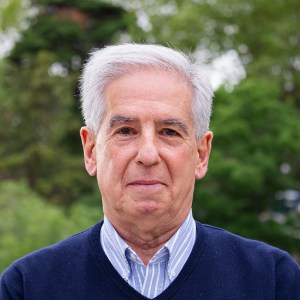
Currently an independent assessment consultant, Helder Sousa has spent more than 45 years in the fields of education and assessment. He holds a Bachelor of Arts (B.A.) in Geography from the University of Lisbon, has completed advanced courses in Public Management at the National Institute of Administration in Portugal and in Leadership in National Assessment at the University of Cambridge (U.K.), and has embarked on a Doctor of Education (Ed.D.) in Assessment in Education at the Institute of Education, University of Lisbon.
He began his career as a geography and social studies teacher at the lower and upper secondary levels in Portugal. After 12 years in the classroom (during which he served as an examination writer in geography and social studies for the Department of Secondary Education), he transitioned to a role at GAVE (Gabinete de Avaliação Educacional), the national exam office of the Portuguese Ministry of Education.
Over a six-year period, Helder applied his educational expertise to curriculum design and co-authored instructional support materials and national examinations. Between 2004 and 2010, he served as Director of the Examinations Department at GAVE. In 2010, Helder Sousa was appointed General Director of GAVE, and in 2015, he became President of the Executive Board of the Portuguese Examination and Assessment Board (Instituto de Avaliação Educativa [IAVE]), formerly known as GAVE.
Over the following five years, he served as the Portuguese representative for the Organisation for Economic Co-operation and Development’s (OECD) Programme for International Student Assessment (PISA), where he was a member of the PISA Governing Board. He was also a member of the International Association for the Evaluation of Educational Achievement (IEA) General Assembly and served on the IEA Standing Committee from 2017 to 2020.
Helder explains that Portugal lacks specific teacher training in assessment practices, which led to ongoing efforts to promote in-service training programs for his team. He became familiar with the Vretta platform through information gathered at international conferences, as well as through the company’s collaboration with Luxembourg’s Ministry of Education on a mathematics platform called MathemaTIC (a “personalized learning environment that offers digitally rich lessons, items, games, and tools, designed to engage and motivate students while improving their level of numeracy and making mathematics learning more enjoyable”) This platform was later adapted for use in Portugal.
Helder also discusses his role as co-founder of FLIP+, an international item library created to facilitate the sharing of technology across France, Luxembourg, Italy, and Portugal. The platform, which now includes Lithuania, Brazil, and Norway, aims to provide free digital assessment items, particularly in mathematics and English, with plans to expand into additional subjects.
Helder discusses the transition from paper-and-pencil to online assessments in education. He explains that while digital assessments offer advantages such as speed, reliability, and interactive items, there are initial challenges due to students’ limited familiarity with technology. He notes that as students become more accustomed to using computers in the classroom, these issues are likely to diminish. Helder also examines the impact of large-scale assessments, both positive and negative, on teaching and learning, and highlights the importance of effectively utilizing assessment data to improve educational practices.
Since his retirement in 2019, Helder has worked as an independent consultant in educational assessment, developing and managing innovative projects related to student assessment. His work focuses on strengthening the link between external and classroom-based assessments to improve the quality of education. He emphasizes the importance of collaborative teaching methods, formative assessment, and valuing mistakes as learning tools, though he noted significant challenges in changing teachers’ established approaches.
Helder describes his work as follows: “Still today, my work as a school consultant is primarily focused on promoting new ways of approaching and implementing assessment within the classroom, together with complementary methodological innovations. By emphasizing the creation of good rubrics as shared tools with students, I’m working with groups of schools to implement a new assessment paradigm. This implicates a new vision about the mixed uses of assessment tools to promote quality feedback, a use of reporting results mostly based on qualitative and descriptive solutions that can be met with the rubrics’ content. These approaches enable students to explore and interpret their own feedback, helping them learn from their mistakes and self-regulate new learning opportunities.”
Reflecting on his career, Helder takes pride in his contribution to improving the technical quality of Portugal’s examination program and enhancing a strong culture of accountability in the educational system. He attributes much of his success to the excellence and dedication of his collaborators: the IAVE team.
Outside of his professional work, Helder enjoys reading, playing tennis, cycling, cooking, and spending time with his family. Feel free to reach out to Helder at: helder.sousa.ac@gmail.com.

