
by learningspiral.com
How do you decide what types of items (questions) are best to use on student assessments?
Assessment items can be grouped into three broad categories:
- objective items (which require students to select the correct response from a list of two or more response options or provide a word or short phrase to complete a statement or answer a question) include multiple-choice, matching, true-false, and completion formats;
- constructed-response items (which require students to organize and present their own original responses) include short answers and longer written responses of various types; and
- performance assessment items, which require students to apply their knowledge, skills, and abilities in the context of, for example, laboratory experiments, mathematics investigations, portfolios, artistic displays or presentations, and various other kinds of performances.
There are many misconceptions about item types and their uses. Some educators believe objective items can only be used to assess basic knowledge and understanding, and to derive information about higher cognitive processes such as application of knowledge, interpretation, analysis and synthesis, critical thinking, and problem solving, constructed-response and performance items are most appropriate. This, of course, is an over-simplification. Although objective items are an efficient and effective way of obtaining information about students’ acquisition of knowledge, if skillfully developed, this item type can be used to assess higher mental processes as well.
In addition to being perceived by some as more “authentic” approaches to assessment, constructed-response and performance items have the advantages of being relatively straightforward to develop and lend themselves to assessing complex learning outcomes. Some disadvantages are that responses may be difficult to score consistently across raters, they require more time (and cost) to score than do objective items, and an over-reliance on this item type may result in an assessment that is unable to cover the full domain being assessed due to time constraints.
Some curriculum learning objectives/expectations lend themselves better to certain item types than others. Although by no means definitive, it is important to pay close attention to the language of the learning objectives/expectations (particularly the verbs) when considering item types. For example, learning objectives using verbs such as “identify,” “name,” “recognize,” and “categorize” may be well-suited for objective item types; verbs like “explain,” “describe,” “solve,” “critique,” and “appraise” may be best assessed via constructed-response items; and verbs, including “demonstrate,” “show,” “investigate,” “perform,” and “create” may lend themselves well to performance assessment formats. A fundamental rule of thumb is that if a learning objective/expectation can be effectively assessed by means of an objective item, it may be advantageous to consider doing so.
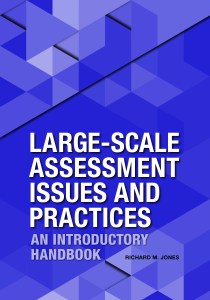
More information about assessment item types can be found in my book: Large-Scale Assessment Issues and Practices: An Introductory Handbook (2014), which can be accessed at https://www.amazon.ca/Large-Scale-Assessment-Issues-Practices-Introductory/dp/0968485731.
Effective item writing is both an art and a science. My next article will provide some guidance on this challenging task.
RMJ Assessment offers a wide range of assessment services, which are outlined on our website: https://rmjassessment.com/large-scale-assessment/.
 RMJ ASSESSMENT