There are many issues to consider and decisions that must be made before embarking on the design and development of a large-scale testing program. The involvement of key stakeholder groups in these discussions is critical to successful program implementation, as this will increase the likelihood that the program will have the benefit of input from a variety of sources and enjoy as much support as possible.
As decisions about important fundamental principles of the assessment program are made, it is useful to record them in what many people refer to as a framework document. This type of foundational document provides an important resource for those who will be involved, subsequently, in program design, development, and implementation. In addition, if it is made publicly available, the document will demonstrate openness and transparency, which can contribute to the promotion of wider understanding and acceptance of the assessment program.
At a minimum, a framework document should include information about the purpose(s) of the large-scale assessment program, the main guiding principles underlying it, ethical considerations, and how the resulting information will be used and reported. A more comprehensive framework may also include the following types of high-level information:
- Frame of reference for interpretation of results
- Differences between classroom and large-scale assessment
- Language(s) of assessment
- Sample versus census assessment
- Definition(s) of the construct(s)
- Alignment with provincial/state/national curricula
- Current research on assessment in the relevant subject(s)
- Assessment blueprint (content)
- Frequency and timing of assessment administration
- How assessment items are developed and field tested
- Accommodations, special provisions, deferrals, and exemptions
- Alternate assessment formats (where applicable)
- Scoring/marking procedures
- Fairness, comparability, and equating of results
Evergreening of the assessment framework should be planned for; seldom is it a static document that remains unchanged for decades. Instead, a framework is more likely to be an evolving document that will adapt the assessment program to changing circumstances, and when adjustments need to be made, they should be communicated clearly to all stakeholders.
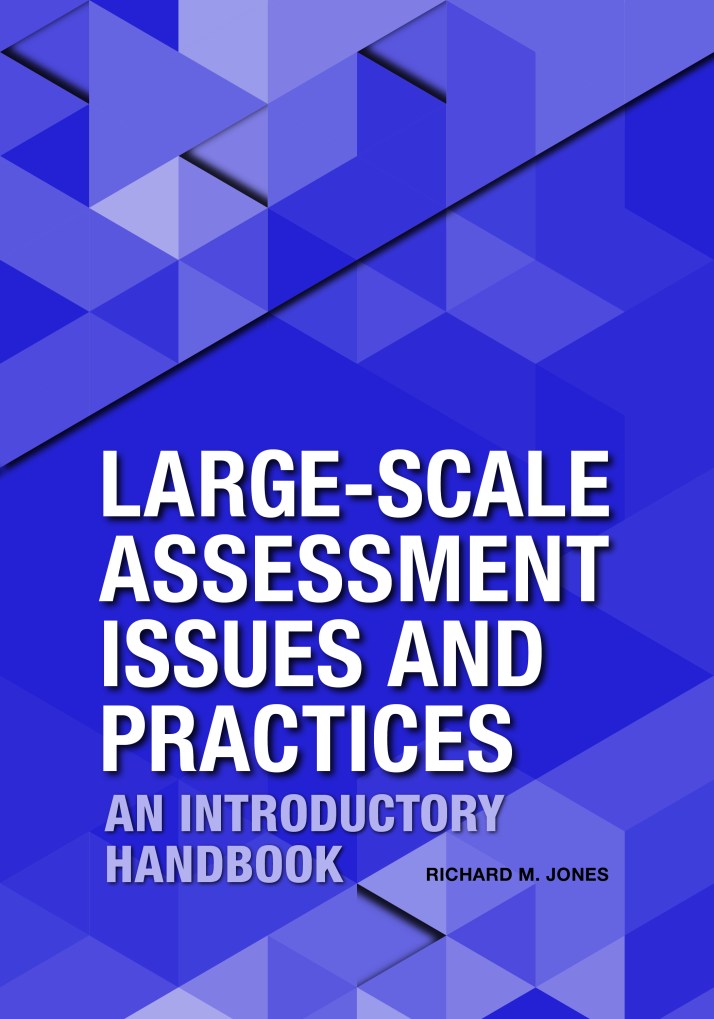
More information can be found in my book, Large-scale Assessment Issues and Practices: An Introductory Handbook (Richard Merrick Jones, 2014). (https://www.amazon.ae/Large-Scale-Assessment-Issues-Practices-Introductory/dp/0968485731)
 RMJ ASSESSMENT